 WITHIN TWIN CITIES PROPERTY FINDER
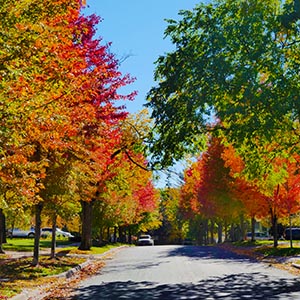
White Oaks rewards attention to the land around a house. Trees, changes in grade and the way a home sits on its lot are central to the neighborhood's longstanding story. A good visit looks at those relationships slowly, giving the outdoor setting the same consideration as the floor plan and finishes.
A landscape with a documented history
In its Spring 2001 historical account, the City traced White Oaks to land from George and Sarah Baird's farm. It described the sale of the remaining 40-acre parcel to J. Frank Ecklund in 1936 and the hilly, oak-covered landscape with wetlands. It is a development story closely tied to the land rather than a uniform grid of interchangeable lots.
That distinction matters during a home search. An established setting can contain different kinds of buildings and later alterations. Rather than expecting every property to match one era or architectural style, look at how the actual house relates to the terrain. Does its main living space look toward the part of the yard you would use? Is the entrance convenient in changing weather? How does the driveway fit the slope?
The same City history identifies another trace of the Ecklunds in the street names: Townes Road and Townes Circle were named for Catherine Ecklund’s family. These small links between a street map and a development story add depth to a walk through the area. Read the White Oaks history in the City’s Spring 2001 magazine.
Homes, trees and terrain
A mature tree can be a beautiful feature, but its condition should not be inferred from its size or an old neighborhood description. During a showing, note the trees closest to the house, driveway and overhead lines. Ask about recent care, storm damage and any planned work. When needed, have an arborist evaluate the trees rather than assuming every visible oak is healthy or centuries old.
The historical description of hills and oaks gives a walk here a useful focus: look at how houses respond to the ground beneath them. A change in elevation can shape the entrance, the garden and the outlook from a room. The setting is part of the architecture, not merely something surrounding it.
Connect the residential setting to daily destinations
The City map places White Oaks north of 50th and France. That relationship is useful context, but the actual route from a home is what determines how convenient an errand or dinner out will feel. Walk it when practical and notice crossings, entrances and the point where the commercial district begins to feel close.
There is also an organized neighborhood connection. The White Oaks Neighborhood Association's bylaws describe a voluntary organization focused on communication and community within the City's defined neighborhood. It is distinct from a property's individual title documents or any obligations that may apply to the lot. Ask separately about those documents during a purchase.
For sellers, the most useful story is the home’s relationship to White Oaks’ terrain: a room opening to outdoor seating, a window framing trees or a thoughtful response to a slope. Document the improvements that make the house work today. The neighborhood’s farm-to-residential history adds context, while those individual details explain the experience of living in this particular home.
For a closer look at buying or selling here, call David Olson at Edina Property Finder, within Twin Cities Property Finder (TCPF), at 952-314-9446. Edina, understood.