 WITHIN TWIN CITIES PROPERTY FINDER
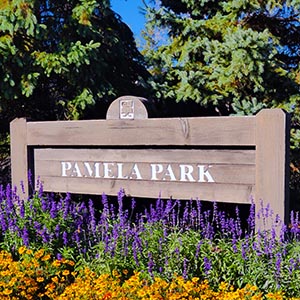
Pamela Park has two outdoor stories worth knowing. There is the active park, with fields, courts and space to play. There is also the water landscape, where past restoration work helps explain what you see along the natural areas. Together they give a neighborhood visit more depth than a quick drive past the nearest houses.
A park with several ways to spend an afternoon
The City's Pamela Park listing places the park at 4303 West 58th Street and includes soccer and baseball facilities, tennis courts striped for pickleball, a playground, a multi-use trail, shelter space and seasonal skating. That variety lets you plan a visit around the activities that matter to you instead of treating every amenity as equally important.
Walk from the parking area toward the part of the park you expect to use. Notice the distance to the playground or field, the available seating and the transition between activity spaces. If you are considering a nearby home, make the trip from that address too. The relationship between the front door and the park entrance is more useful than a broad claim of walkability.
Pamela’s mix of sports facilities and natural areas makes it worth exploring beyond the first field you see. Leave time for the trail as well as the courts. The contrast between organized recreation and the pond landscape is a large part of what makes the park an informative starting point for understanding the neighborhood.
The wetland has a practical purpose
Restoration is an important part of Pamela Park’s history. The watershed district's project account supplies the fuller history: the completed restoration included lake and pond dredging, wetland-settling ponds and a nature trail. The district records completion in 2002 and later sediment removal from the northern pond in 2019.
The settling areas were designed to capture pollutants before water moves toward Pamela Lake and Minnehaha Creek. That makes the landscape useful infrastructure as well as scenery. Vegetated edges and ponds should be understood in that context rather than judged only by whether they resemble a manicured lawn.
For a homeowner, the lesson is practical. Notice where water goes on the specific lot, how landscaping meets public or natural land, and whether any planned changes would affect drainage. A neighborhood restoration project does not tell you the condition of an individual basement, the limits of a property or its flood risk.
Look closely at the home behind the listing
A neighborhood-wide construction date is a poor substitute for understanding a house. Ask which parts are original and which have been changed. Examine the connection between a main living area and any addition, and consider whether the spaces you would use every day are comfortable without another project.
Think about outdoor maintenance too. If you want room to garden, play or entertain, identify the usable area rather than relying on total lot size. Look at sunlight, ground level and the distance from the kitchen to the outdoor space. During the inspection process, bring questions about the roof, mechanical equipment and water management to qualified professionals.
For planned remodeling, the City provides permit-history and residential-project resources. An available record can help explain a prior improvement, while an early conversation about your proposed work can reveal what additional review is needed. Do not assume that a neighboring project establishes approval for yours.
Make park proximity work for your routine
Visit the street on an ordinary day, and return when park activity would overlap with your time at home. Observe parking patterns and listen from the rooms and yard you would use. Being near recreation can be useful, but the best fit depends on the particular location and your own preferences.
When preparing a Pamela Park home for sale, connect the presentation to documented features: the floor plan, the improvements and a verifiable route to the park. Let the active spaces and water landscape provide context without promising an identical experience for every address. The combination of recreation and restored wetland gives this part of Edina a story that extends beyond the boundaries of a single yard.
For a closer look at buying or selling here, call David Olson at Edina Property Finder, within Twin Cities Property Finder (TCPF), at 952-314-9446. Edina, understood.