 WITHIN TWIN CITIES PROPERTY FINDER
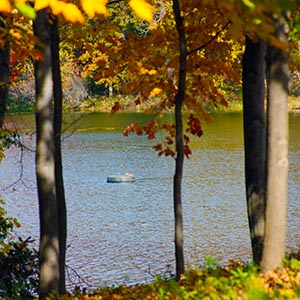
Indian Hills is a neighborhood where a home’s relationship to its site deserves close attention. Arrowhead Lake and Indianhead Lake provide distinct local reference points, while the way a house meets its yard can be just as important as the interior. Start a visit by looking at the setting, then examine how that setting works from room to room.
A view and a garden can each be compelling reasons to look at a home. Keep the questions specific: what outlook does this property have, what land or access rights accompany it, and what care will it require? Those questions leave room to appreciate the landscape without making assumptions about every address.
Two lakes with separate improvement projects
Nine Mile Creek Watershed District has active project information for both lakes. At Arrowhead, its study identified phosphorus released from lake-bottom sediments as a major water-quality concern. The district reports that treatment and aeration installation were completed in 2024, with monitoring continuing. Read the Arrowhead Lake project update.
For Indianhead, the district’s project page reports that 2025 monitoring showed the lake meeting MPCA water-quality standards following improvements begun in 2024. That is a dated monitoring result, not a blanket statement about conditions on any day or a guarantee about recreation. See the Indianhead Lake project information.
The project pages also provide a way to follow changes in the lakes over time. If the water is important to your home decision, read the latest district information and separate ecological management from questions about your own property.
Distinguish an outlook from a property right
For any home described as lakefront or lake-access, verify the surveyed boundary and the relevant recorded rights. Ask how the shore can actually be reached and whether access depends on another parcel or an agreement. Do not infer a boat launch, dock right or public access point simply because water appears near the house.
Look at the view from the rooms and outdoor spaces you expect to use most. Seasonal vegetation can change that outlook. Where the ground slopes, walk the route to the yard and examine the condition of steps or retaining walls. A dramatic photograph may tell you little about the effort required to use and maintain the site.
Keep drainage and water questions property-specific. A lake’s water-quality result does not establish a home’s flood exposure, and the neighborhood name does not settle which permits a proposed project may require. Bring questions about a particular improvement to the appropriate City and watershed staff.
Include a public recreation stop
Creek Valley School Park, at 6301 Gleason Road, is one public destination to investigate during an area visit. The City describes a large playground, soccer fields, basketball hoops and a hill used for sledding in winter. See the park’s current facility information.
Test the trip from the address you are considering and choose the route that suits your activity. Nearby recreation is most useful when the actual connection works for you. The school’s presence beside a park should not be treated as a statement about the attendance assignment for an Indian Hills property.
Let the house and the site share the decision
Inside, consider how the floor plan responds to the landscape. Does the main living space face the outlook that attracted you? Is there a comfortable connection to a patio or garden? Are stairs and circulation well suited to your routines? Evaluate documented improvements and maintenance needs alongside finishes.
For sellers, an accurate survey, improvement records and photographs of the actual outdoor spaces can make the property easier to understand. Describe what is present without promising exclusivity, future appreciation or an experience shared by every home in the neighborhood.
For a conversation about buying or selling in Indian Hills, call David Olson at Edina Property Finder, within Twin Cities Property Finder, at 952-314-9446. Edina, understood.