 WITHIN TWIN CITIES PROPERTY FINDER
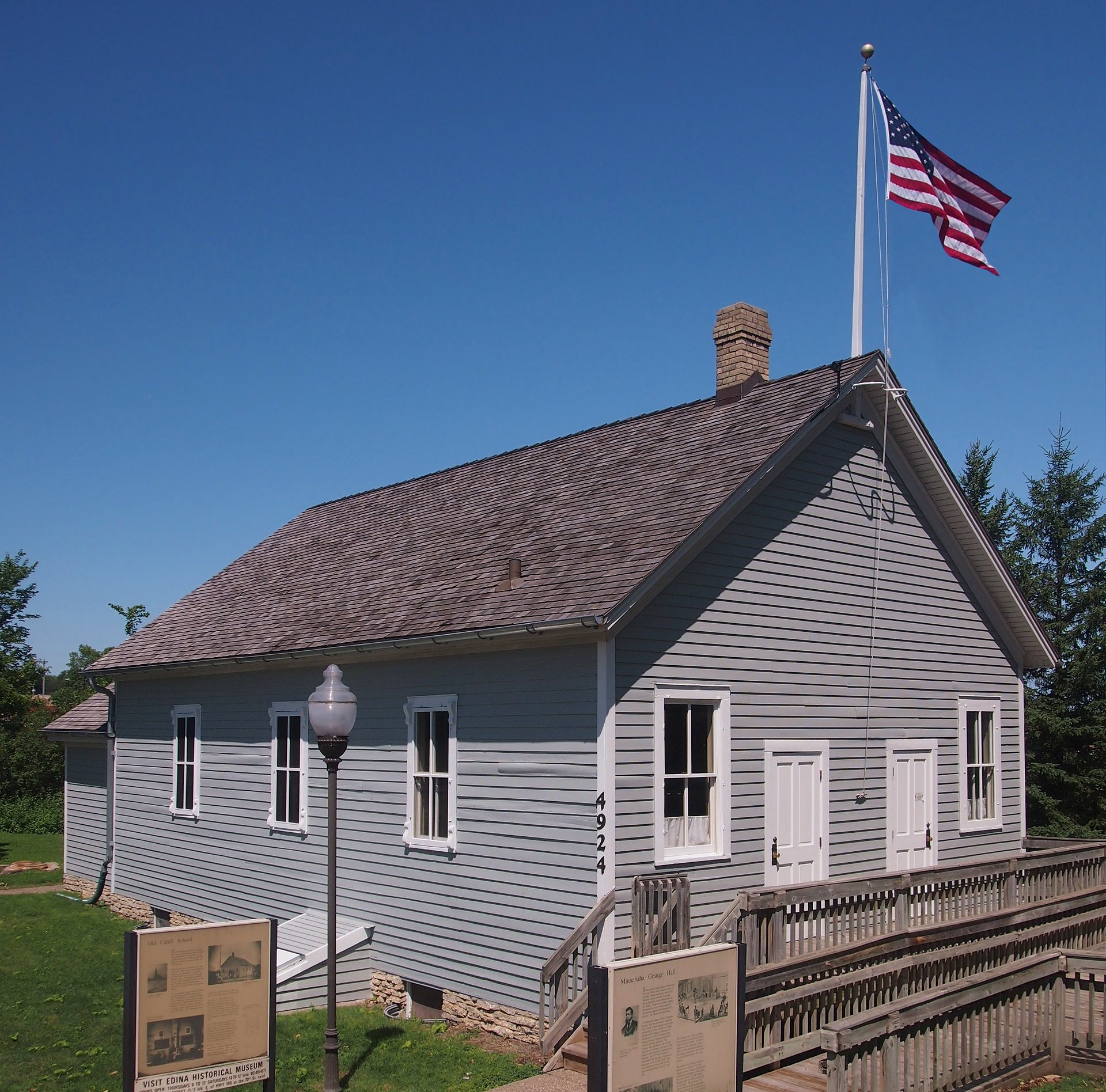
Edina's history is still visible in ordinary journeys: a creek crossing, a small schoolhouse, an older home set among later neighbors. Knowing a little of that history gives those places more meaning. It also helps explain why a familiar street name, a historic designation and a modern neighborhood boundary do not always refer to the same thing.
The city's story extends beyond a simple progression from farms to fine homes. It includes contested decisions, buildings moved to survive, and housing practices whose effects the community continues to confront.
Farms and a mill before the village
The regional story predates European settlement. Hennepin County's history overview recognizes established Dakota and Ojibwe societies before French explorers and traders arrived. Edina's later municipal history should be read within that longer setting.
Two nineteenth-century centers help explain the developing community: farming around Cahill and the settlement associated with the mill. The surviving Cahill School, built in 1864, served more than classroom needs. It also hosted meetings, dances and church services. Its original location was near Cahill Road and West 70th Street; today it stands in Frank Tupa Park.
That move is worth remembering when exploring old landmarks. The building tells a genuine local story, but its present surroundings are not the setting in which that story began.
How Edina got its name
Edina separated from Richfield Township and incorporated as a village in 1888. The City's account of Minnehaha Grange Hall places the naming decision in the hall that served as the village's meeting place from 1888 to 1942.
The name was not inevitable. Hennepin Park and Westfield were considered before Edina prevailed, 47 votes to 42. Andrew Craik had named the mill Edina after his Scottish birthplace, and Henry Brown pressed for the village to take that name. The City's history of the naming debate specifically rejects the familiar version that reduces it to an Irish-versus-Scottish contest.
The more interesting story is a local disagreement recorded through meeting minutes and Sarah Baird's diary. It brings the city's beginnings down to a recognizable scale: neighbors debating the identity of the place they shared.
Read the landscape through surviving homes
The Baird House, built in 1886 at 4400 West 50th Street, links the area's agricultural past with its later residential growth. The City's account notes that land from the Baird farm was subsequently platted into the Country Club District. The Grimes House, built in 1869 at 4200 West 44th Street, connects the nursery and farming landscape to the later development of Morningside.
These are individual historic properties, not evidence that “Baird” and “Grimes” are current official neighborhoods. Appreciate private homes from public areas and respect their owners' privacy. A historic listing does not make a residence a public attraction.
The Country Club District offers another chapter: planned residential development beginning in 1924. Its designated historic area should not be confused with every property carrying the wider Country Club neighborhood name.
Understand what preservation means now
For a homeowner, historic character carries practical questions as well as visual appeal. The City's Country Club guidance describes review requirements for specified work; it does not prohibit every alteration. Before relying on a renovation idea, confirm whether the address is designated, which treatment plan applies and what review the proposed work would require.
An honest history also acknowledges exclusion. The City has condemned discriminatory housing covenants and participates in Just Deeds, which helps homeowners identify and discharge them. Architectural appreciation need not erase the barriers that accompanied some earlier development.
Start an exploration with Cahill School and Minnehaha Grange Hall, then follow the City's landmark resources to the places that interest you. Check the Historical Society's current programming before expecting interior access. For a home purchase, pair that curiosity with the property's own records: its history can be a source of understanding, not a substitute for inspection.
Curious about the history behind an Edina home you are considering? Call David Olson at 952-314-9446. Edina Property Finder, within Twin Cities Property Finder. Edina, understood.